
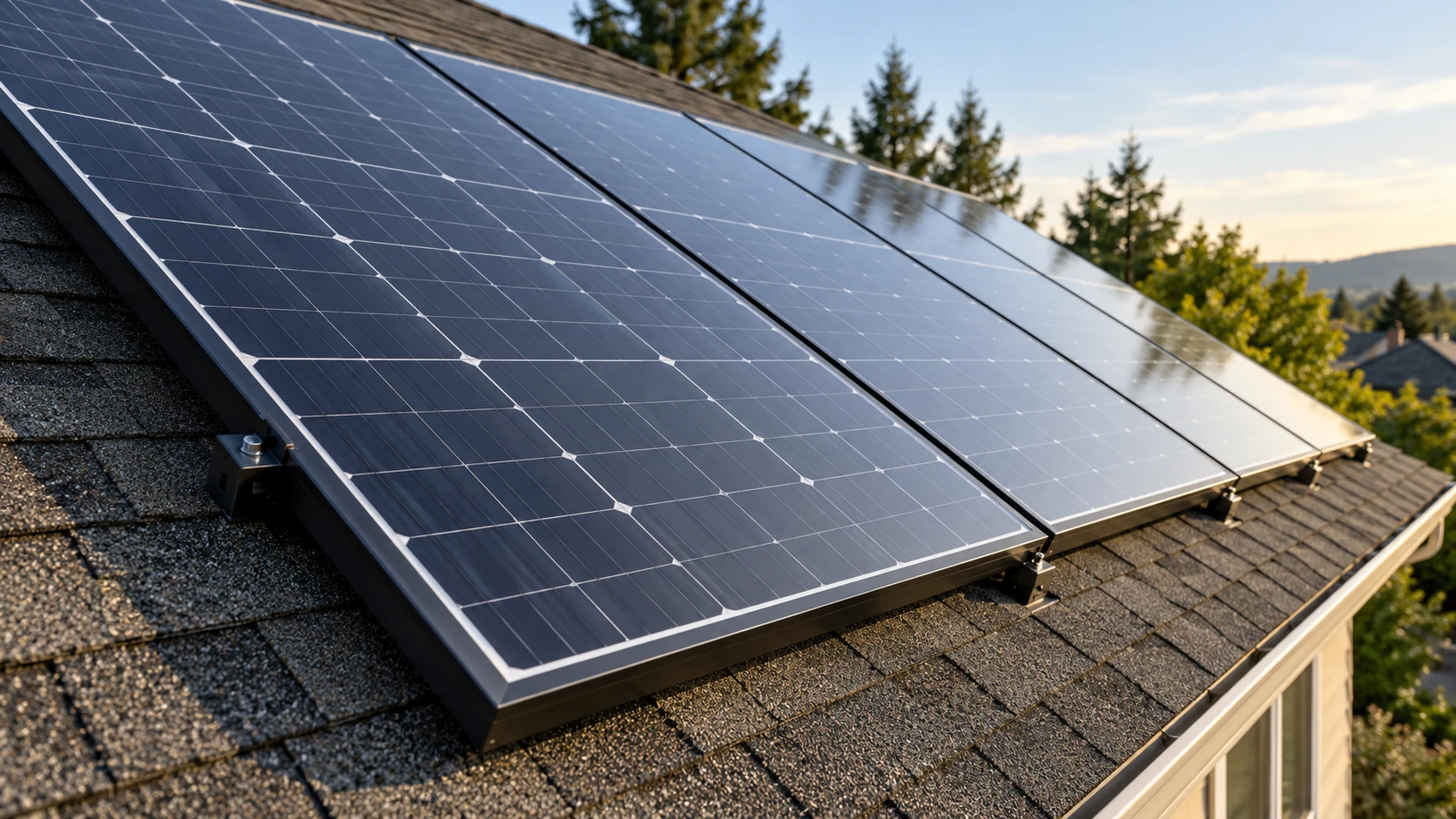
The best solar panel is the one that fits your roof, budget and installation. Compare the exact model and its warranty alongside the total installed quote, expected production and installer support. Higher rated wattage alone does not establish the best lifetime value.
This page contains a paid referral link. Acara may earn a commission if you use the optional service, at no extra cost to you. Affiliate disclosure.
Start with the job, not the brand
Ask installers how much usable, unshaded roof area you have and what annual energy production the proposed system is expected to deliver. Limited space can make power per unit of panel area more useful; a larger roof may allow a lower-cost combination. Roof obstructions, panel dimensions, electrical design and local rules also affect what fits.
Use your annual electricity consumption and an address-specific production estimate to compare system sizes. Our solar sizing guide explains the calculation. The homeowner solar guide covers the broader purchase decision.
Compare real model specifications
These examples show why the exact model matters. They are not a claim that one panel will produce the most energy or offer the lowest cost on every roof. Check current availability, the installation quote and the warranty for the exact product offered.
| Model example | Published information | What to verify |
|---|---|---|
| REC Alpha Pure-RX, 460 W | REC’s US datasheet lists the 460 W class and a 20-year standard product warranty; its conditional ProTrust coverage differs. The datasheet lists 92% minimum power in year 25. | Ask whether your installer and system qualify for any enhanced warranty and what labor coverage applies. REC US datasheet. |
| Qcells Q.TRON BLK M-G2+, 440 W | Qcells lists up to 440 W, up to 22.5% efficiency and a 25-year product and performance warranty for this series, subject to its warranty terms. | Confirm the quoted wattage, model revision and warranty applicable in your market. Qcells product information. |
| Panasonic EVERVOLT HK Black | Panasonic lists 410 W and 400 W HK Black documents in its product and warranty library. | Read the datasheet and warranty for the exact quoted model; installer eligibility and coverage terms can differ. Panasonic documentation. |
Wattage and efficiency are different specifications. Wattage is rated panel power under specified test conditions; efficiency describes how much incoming sunlight is converted at the test conditions. Physical dimensions and usable roof space also matter.
Other manufacturers and models may also fit. Availability, price and warranty support vary; request two or three complete proposals before deciding. Independent testing results may be useful; the PVEL scorecard provides a starting point. Check the tested manufacturer and exact model rather than assuming all products share a result.
Two warranties, two different promises
A product warranty addresses covered defects. A performance warranty specifies a minimum output over time under its terms; it is not a promise of your roof’s annual electricity production. Ask who pays for diagnosis, removal, shipping and reinstallation, which exclusions apply, and who handles a claim if the installer closes.
Panels change output with cell temperature and age. Compare the exact datasheet’s temperature coefficient, initial performance and warranty schedule; weather, shade, soiling, inverter losses and export rules affect what that performance is worth. For maintenance expectations, see our solar maintenance guide.
Are premium panels worth it?
Compare complete installed proposals, including system capacity, annual production, warranty, inverter and workmanship. For a 10,000 W system, an extra $0.05 per watt is $500 before taxes or other changes, not a guaranteed benefit. Whether the premium pays back depends on your quoted prices and the actual value of additional electricity under your tariff.
Do not assume every extra kilowatt-hour is worth the retail rate: exported power may receive a different credit. Use your actual quote and projected net bill savings in the solar payback guide. Check current tax-credit rules before including an incentive.
Panel quote checklist
Check the items you have received in writing. This is a preparation list, not a product recommendation.
0 of 5 items checked.
A strong installation matters too
Check licensing and insurance, installation history, roof and electrical scope, production assumptions and who will service the system. A premium module cannot compensate for poor design or workmanship. Our homeowner guide explains how to review a full proposal.
Compare local installation quotes
Use this optional paid-referral service to request information from installers. Check qualifications and compare their written proposals independently.
Find local solar installers (paid link)
Common questions
Is higher panel efficiency always better?
Not necessarily. Higher efficiency can help where usable roof area is limited, but system price, actual annual production, equipment fit and warranties matter too.
Does a performance warranty guarantee my electric bill?
No. It states specified module performance under warranty conditions. Your output and bill depend on the site, weather, usage and utility tariff.
Can I still claim the federal residential solar credit on a new installation?
The Section 25D credit generally ended for qualifying expenditures after December 31, 2025. Check historical eligibility and any current state or local programs in our solar credit guide and with a tax professional.
Next: compare the exact proposal and ask for the supporting datasheets and warranty documents. Find local installers (paid link).