
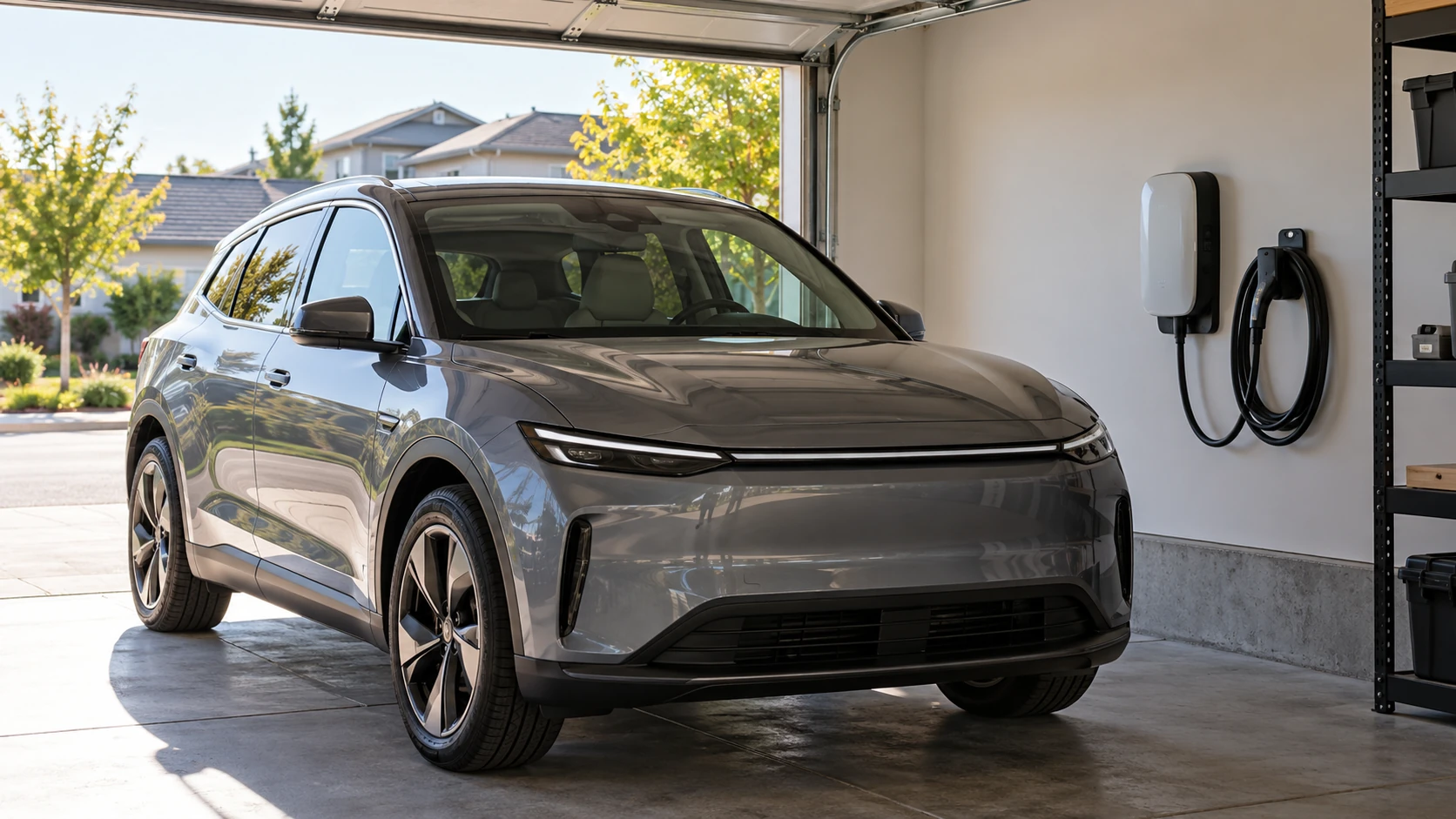
The EV charger federal tax credit under Section 30C ended for property placed in service after June 30, 2026. If your charger was placed in service by that date, a claim may still be available for the applicable tax year if the location, equipment and other requirements were met. This guide explains what to check and how to document an eligible claim.
The credit is officially called the Alternative Fuel Vehicle Refueling Property Credit (Section 30C of the tax code, sometimes called the EV charging equipment tax credit). For residential installations, it covers 30% of your total cost, up to a maximum of $1,000. It applies to the charger hardware, the electrical installation, and in some cases a panel upgrade, provided your home is in a qualifying census tract and the work is completed on or before June 30, 2026. For a full breakdown of home EV charger types and what installation typically costs, see our home EV charger guide.
This article contains no affiliate links. We earn no commission from any product or service mentioned here.
Table of Contents
- Does your address qualify? The location requirement explained
- What the credit covers and how much it’s worth
- Full eligibility checklist
- EV Charger Credit Estimator
- How to claim the credit: Form 8911 step by step
- Claiming the credit for a 2023, 2024, or 2025 installation
- Can renters claim the EV charger tax credit?
- If your address doesn’t qualify: what to look for instead
- Frequently Asked Questions
- Conclusion
Does your address qualify? The location requirement explained
This is the part most other articles skip or bury. Since 2023, the EV charger tax credit has required your home to be in an eligible census tract — specifically, one that meets either of these two definitions from IRS Notice 2024-20:
- Low-income community: A census tract with a poverty rate of at least 20%, or where median family income is 80% or less of the area or statewide median.
- Non-urban area: A census tract where at least 10% of the census blocks are outside an urbanized area, as defined by the Census Bureau.
Eligibility depends on the census tract and the rules applicable to the date the equipment was placed in service. A nearby eligible address does not establish that yours qualifies.
Before claiming an earlier installation, check the installation address and retain the tract information that applies to the service date.
How to check if your address qualifies
The U.S. Department of Energy and Argonne National Laboratory provide a free mapping tool built specifically for this purpose: the 30C Tax Credit Eligibility Locator. Enter your installation address, confirm whether your census tract is classified as eligible, and record your 11-digit census tract GEOID. You’ll need it when you fill out Form 8911. If the Argonne tool is unavailable, you can confirm eligibility directly using IRS Appendix B at IRS.gov.
Which GEOID list applies to you
The IRS provides more than one census-tract list. Which list applies depends on the service date and the guidance for the relevant tax year:
IRS census tract boundary list by charger installation year.
| When charger was placed in service | Census tract list to use | IRS appendix |
|---|---|---|
| January 1, 2023 – December 31, 2024 | 2015 census tract boundaries | Consult applicable IRS guidance; the original notice permits an eligible tract on either applicable list for this period |
| January 1, 2025 – June 30, 2026 | 2020 census tract boundaries | Appendix B |
Use the official locator and the IRS instructions for the tax year in which the property was placed in service. IRS Notice 2024-20 describes the applicable lists for earlier years; the December 2025 Form 8911 instructions direct the 2025-and-later filing workflow to the 2020 tract identifier and Appendix B.
Keep a record of the applicable tract identifier and check the guidance for the actual service year rather than assuming one list is the only option for every earlier installation.
What the EV Charger Federal Tax Credit Covers and How Much It’s Worth
For eligible nonbusiness property placed in service by June 30, 2026, the credit can equal 30% of a qualifying item and directly attributable associated costs, subject to a $1,000 cap per qualifying item and the other rules. Shared electrical work must be allocated appropriately; a dual-port setup is not an automatic $2,000 credit. See the IRS guidance and consult a tax professional.
Based on the IRS’s own example in Publication 6027, the following costs count toward your eligible total:
- The EV charger (EVSE) hardware itself
- Electrical installation labor
- Dedicated conduit and wiring that runs solely to the charger
- A wall mount or pedestal that directly supports the charging port
- A new electrical panel upgrade, if the cost is directly associated with enabling the charger installation
That last point matters. If your electrician had to upgrade your panel to support the charger, that upgrade cost can be included, as long as it’s traceable specifically to the charger, not a general home upgrade. Keep the invoice itemized.
A general panel upgrade unrelated to the charging property is not automatically eligible. The IRS requires the original use of the qualifying property to begin with the taxpayer. Do not assume a charging level or an ordinary outlet alone settles eligibility; check the specific equipment and associated costs against the applicable instructions.
What your credit will actually be
Example EV charger tax credit amounts based on total qualifying costs.
| Total qualifying cost | 30% credit | What you claim |
|---|---|---|
| $1,200 | $360 | $360 |
| $2,000 | $600 | $600 |
| $2,800 | $840 | $840 |
| $3,334 or more | $1,000+ | $1,000 (maximum) |
| $4,000 | $1,200 (capped) | $1,000 (maximum) |
This credit is nonrefundable: it is limited by the applicable tax-liability rules and does not itself create a refundable credit. A refund can still result from withholding or other payments. For an eligible pre-deadline installation, check Form 8911 and consult a tax professional about your actual return.
Full eligibility checklist
Before filing, confirm you meet all five conditions. If any answer is no, the credit doesn’t apply.
| Requirement | What it means |
|---|---|
| ✅ Placed in service by June 30, 2026 | The property must be ready and available for its specific use; for a home charger, the IRS describes this as operational. A purchase or order alone does not establish the service date. |
| ✅ Installed at your primary residence | For the personal-use credit, the qualifying property must be installed on property used as your main home. Check the instructions for any business-use claim. |
| ✅ Located in an eligible census tract | Check your GEOID against IRS Appendix A or B, or use the Argonne mapping tool as a starting point. |
| ✅ Qualifying new charging property | The property must meet the IRS requirements for recharging a vehicle at the charging point. Bidirectional capability alone does not disqualify equipment; check the full eligibility rules. |
| ✅ New equipment only | The charger must be new, not used or refurbished. |
There is no income limit for the EV charger federal tax credit under Section 30C. This is different from the EV vehicle purchase credit, which had income thresholds. One caveat worth knowing: if you’re subject to the Alternative Minimum Tax (AMT), the credit may be limited depending on your AMT liability. For most homeowners this isn’t a factor, but higher-income filers should verify with a tax professional. Because this is a non-refundable credit, filers with very low tax liability may not benefit from the full amount regardless.
EV Charger Credit Estimator
Enter your costs to see your estimated 30C federal tax credit.
This is an estimate. The actual credit depends on your tax liability and whether your address is in a qualifying census tract. The credit is non-refundable: it can only reduce taxes you owe, not generate a refund beyond zero.
Once you’ve estimated your potential credit, here’s exactly how to claim it.
How to claim the credit: Form 8911 step by step
Use IRS Form 8911 and the instructions for the tax year the property was placed in service. The December 2025 revision is for tax years beginning in 2025 or later; earlier tax years use prior revisions. For a missed earlier claim, check whether an amended return is appropriate and timely.
Documents to gather before you file
- Purchase receipt for the EV charger hardware
- Electrician’s invoice showing itemized labor, materials, and conduit/wiring costs
- Permit documentation from your local government (Form 8911 has a line for a certification or permit number)
- The date the charger became operational (your placed-in-service date)
- Your 11-digit census tract GEOID from the Argonne tool or IRS appendix
What you’ll fill out on Form 8911
For each charger you’re claiming, complete a separate Schedule A (Form 8911), then carry totals to the main form. The key fields include the address and placed-in-service date, total cost of qualifying property, your census tract GEOID on Schedule A line 6b for the applicable form revision, a permit or certification number when applicable, and the credit calculation: 30% of eligible cost, subject to the $1,000 personal-use limit per item and the tax-liability limitation.
Once you claim the credit, the IRS requires you to reduce the tax basis of your property by the credit amount. This affects your cost basis if you ever sell the home, though for most homeowners the impact is minimal.
Already installed in 2023, 2024, or 2025?
If you’re wondering whether the EV tax credit 2026 rules cover a charger you had installed in a previous year — they do. You claim the credit on the return for the year the charger was placed in service, not when you purchased it. If you installed in 2025, file Form 8911 with your 2025 federal return, due April 15, 2026.
If you already filed for 2023 or 2024 and did not claim a credit you were eligible for, an amended return using Form 1040-X may be an option. Refund-claim deadlines depend on when the return was filed and when tax was paid; extensions and other circumstances can matter. Check the IRS Form 1040-X instructions or consult a tax professional before assuming your deadline.
What you’ll need: receipts, an itemized electrician invoice, permit documentation, and GEOID confirmation showing your location was in an eligible census tract at the time of installation. For earlier installations, check the IRS tract-list guidance for that service year and the version of Form 8911 applicable to the return. Confirm your filing deadline before relying on an amendment.
Can renters claim the EV charger tax credit?
Yes — with conditions. The credit requires the property to be your principal residence, but it doesn’t require you to own it. A renter can claim the 30C credit if the rental is their main home, they personally contract and pay for the charger and installation work, and the installation is in an eligible census tract by June 30, 2026. In practice, this requires the landlord’s permission for any electrical work. Renters who meet all conditions follow the same Form 8911 process as homeowners described in the claiming section above.
If your address doesn’t qualify: what to look for instead
If the Argonne map shows your census tract is ineligible, the federal credit isn’t available, but a home EV charger rebate through your state or utility may be. Many programs have no location restriction:
- Utility rebates: Search your utility’s site for its current charger program, eligible equipment, application timing and funding.
- State programs: Check your state energy office for currently funded programs, eligibility, amounts and deadlines.
- Local programs: Some municipalities and co-ops offer additional incentives not available at the state level.
Missing the federal credit is frustrating, but between utility rebates and state programs, there’s often still money on the table worth finding before you write off the savings entirely. Our EV charger installation cost guide can help you estimate your total project cost before rebates, and our home EV charger guide covers the setup process end to end.
Frequently Asked Questions
Both. The credit covers 30% of the total qualifying cost, which includes charger hardware, electrical installation labor, dedicated wiring and conduit, a wall mount or pedestal, and a panel upgrade if it was directly associated with enabling the charger installation. Keep itemized receipts for all costs so you can document what’s traceable to the charger.
No income limit applies to the Section 30C charger credit, unlike the EV vehicle purchase credit (30D), which did have income thresholds. Any homeowner or renter in an eligible census tract can claim it regardless of income. The credit is non-refundable, so it can only offset federal tax you actually owe and won’t generate a cash refund beyond that.
You may be able to amend an eligible 2024 return. Check the Form 1040-X filing deadline and the Form 8911 revision and census-tract guidance applicable to that year. Keep receipts, installation records and any applicable permit information.
No. The IRS doesn’t maintain an approved model list for residential installations. Check whether the actual equipment meets the IRS definition, its original use began with you, and all other requirements are satisfied. Bidirectional capability alone does not disqualify charging equipment.
Per IRS Form 8911 instructions, a home EV charger is placed in service when it is fully installed, connected, and ready for use. Not when you purchased it or scheduled the install. The date your electrician completes the work and you can actually charge a vehicle is the date that counts. Your electrician’s invoice and permit typically establish this date.
These are separate credits with separate rules. The EV vehicle purchase credit (Section 30D) ended for vehicles acquired after September 30, 2025, under the One Big Beautiful Bill Act. The EV charger credit (Section 30C) remains available for chargers placed in service by June 30, 2026, in eligible locations. If you previously claimed the 30D credit on a prior return, that does not affect your ability to claim the 30C charger credit — they are filed separately. If you purchased your EV before the September 30, 2025 cutoff and install a qualifying charger by June 30, 2026, you may be able to claim both on the relevant year’s tax return.
Use the free Argonne 30C Tax Credit Eligibility Locator — enter your installation address and it will tell you whether your census tract is eligible. Record the 11-digit GEOID it returns; you’ll need it on Form 8911. If the Argonne tool is unavailable, cross-check your GEOID directly against the IRS appendix at IRS.gov. The December 2025 instructions use the 2020 identifier and Appendix B for their applicable filing years. Earlier service years may have different list guidance; consult the IRS notice and form revision for the year concerned. Your address must fall in an eligible census tract — either a low-income community or a non-urban area as defined by IRS Notice 2024-20 — for the credit to apply.
A state or utility incentive may be available alongside a qualifying federal 30C claim, but check each program’s terms. Depending on how an incentive is structured, it may reduce the cost eligible for the federal credit. Review current IRS guidance or consult a tax professional about your situation.
Conclusion
An eligible earlier installation may support a personal-use credit up to $1,000 per qualifying item, subject to the location, timing and tax-liability rules. Property placed in service after June 30, 2026 does not qualify. Check your address first, keep your receipts organized, and file Form 8911 with your return for the year the charger was placed in service. If you missed it on a prior return, an amended filing is still an option for most people.
Once you’ve confirmed eligibility, your next step is choosing the right equipment. Our best home EV chargers guide covers the top-rated Level 2 units, and our EV charger installation cost guide explains what to check in an electrician’s invoice.
If you’re also evaluating solar panels, our 2026 solar federal incentives guide covers the current federal incentive picture for homeowners.
Not tax advice: The information on this page is for general educational purposes. Tax credit eligibility depends on your individual tax situation. Verify your census tract status using the official IRS Appendix B and consult a qualified tax professional before filing. IRS guidance on the 30C credit is subject to change; confirm current rules at IRS.gov before acting on this information.