
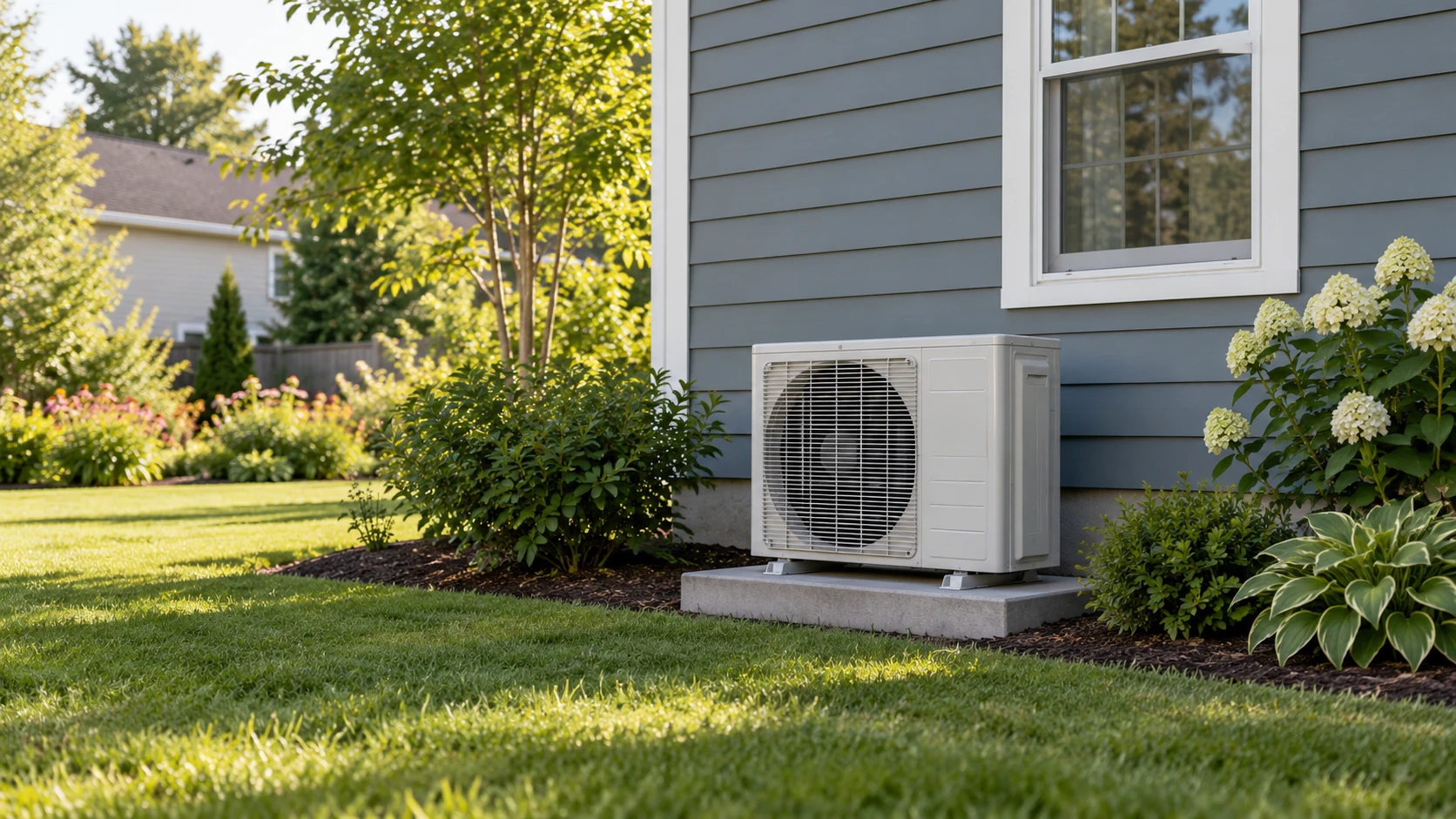
A qualifying heat pump placed in service in 2025 may have generated an Energy Efficient Home Improvement Credit of up to $2,000 on the 2025 return. The heat pump tax credit 2026 question is about that earlier tax year: the Section 25C credit ended for property placed in service after December 31, 2025.
The credit doesn’t come automatically. Your installer doesn’t file it. The IRS doesn’t notify you. You claim it on your 2025 return using Form 5695, and if your heat pump doesn’t meet the specific CEE efficiency threshold required, you get nothing — regardless of what the contractor told you. I’ve seen this catch homeowners off guard more than any other part of the process.
This guide explains the 2025 credit rules, records and limits, and what to check if you missed a qualifying claim. If your system was installed later, check current state and utility programs rather than assuming the federal credit applies.
This article contains a paid referral link; Acara Institute may earn a commission if you use the service. It explains general rules and is not tax advice. Verify your circumstances and current guidance at IRS.gov or consult a tax professional before filing.
Table of Contents
- Is the Heat Pump Tax Credit Still Available in 2026?
- How Much Can You Claim? (The $2,000 Breakdown)
- Which Heat Pumps Qualify?
- Do You Qualify?
- How to Claim It: Form 5695 Step-by-Step
- Can You Stack a Tax Credit With a State Rebate?
- Installed in 2026? Here’s What You Can Still Get
- Mistakes That Cost Homeowners the Credit
- Frequently Asked Questions
- Conclusion
Is the Heat Pump Tax Credit Still Available in 2026?
For qualifying heat pumps placed in service in 2025, the credit belongs to the 2025 return under Section 25C. Eligibility, other credits and tax-liability limits determine the usable amount. If a qualifying claim was missed, ask whether an amended return is appropriate.
The key boundary that trips people up: the credit applies to the year you had the system installed and placed in service, not the year you file. A qualifying 2025 installation belongs on the 2025 return; a qualifying 2024 installation belongs on the 2024 return. Keep the records and use the form and instructions for the correct tax year.
How Much Can You Claim? (The $2,000 Breakdown)
The heat pump federal tax credit is 30% of the cost of a qualifying system, capped at $2,000 per year. The separate $1,200 annual limit covers specified improvements such as insulation, windows and doors. Qualifying heat pumps and heat pump water heaters share the separate $2,000 annual limit with qualifying biomass equipment.
To claim the full $2,000, your total installed project cost needs to be at least $6,667. The actual credit also depends on qualifying costs, the combined limit for relevant equipment, other credits and tax liability.
| Project cost (installed) | 30% of cost | Actual credit (capped at $2,000) |
|---|---|---|
| $4,000 | $1,200 | $1,200 |
| $6,000 | $1,800 | $1,800 |
| $6,667 | $2,000 | $2,000 |
| $10,000 | $3,000 | $2,000 (capped) |
| $15,000 | $4,500 | $2,000 (capped) |
The cost basis includes both equipment and labor. Keep your contractor invoice, as the IRS can ask you to substantiate the amount you claim.
The non-refundable catch — and why it matters
This credit is non-refundable. That’s not just a technicality. It’s the single most misunderstood thing about it.
Non-refundable means the credit can only reduce your federal tax liability to zero. It can’t produce a refund beyond what you already overpaid in withholding. If you owe $800 in federal income tax before the credit, you get $800 back, not $2,000.
Income alone does not determine the amount usable. Check your actual tax liability, the form’s credit-limit worksheet and any other credits before assuming you can use the maximum. Use the estimator below to see what that means for your specific numbers.
Estimate Your Heat Pump Tax Credit
For a qualifying 2025 installation, enter eligible costs, any subsidy you have confirmed reduces those costs, and an illustrative tax liability. This estimates arithmetic only; it cannot determine eligibility or other-credit limits.
Which Heat Pumps Qualify? (CEE Tiers, Mini-Splits, and the Efficiency Trap)
Not every heat pump qualifies. This is where a lot of homeowners get burned: they installed a system they assumed was eligible, and it isn’t.
For the 2025 Section 25C heat pump claim, check the applicable Consortium for Energy Efficiency (CEE) highest-efficiency tier in effect at the start of the installation year. Requirements depend on equipment type; ENERGY STAR certification alone does not establish eligibility.
| Equipment | What to verify for a 2025 claim |
|---|---|
| Air-source split or packaged heat pump | Exact equipment type, applicable CEE tier, manufacturer certification, QMID and placement-in-service date |
| Ductless mini-split | Exact matched indoor and outdoor model combination and the applicable 2025 CEE tier |
| Geothermal heat pump | Separate Section 25D rules and applicable timing; do not treat it as the same Section 25C claim |
For mini-splits: both the indoor and outdoor units must meet the CEE tier together as a matched system. An outdoor unit that qualifies on its own doesn’t guarantee the combined system qualifies. Verify the specific model pair before claiming.
What about heat pump water heaters?
Qualifying heat pump water heaters and heat pumps share the separate $2,000 annual limit with qualifying biomass equipment. The additional $1,200 limit covers other eligible categories; installing both a heat pump and heat pump water heater does not create two separate $2,000 limits.
Do You Qualify? (Eligibility Rules + Non-Refundable Check)
The eligibility rules for the heat pump tax credit 2026 filing are clear-cut for most homeowners:
- Primary residence only. The heat pump must be in a home you use as your primary residence. Rental properties and vacation homes don’t qualify. Note: you don’t have to own the home — renters can claim the credit for a qualifying heat pump installed in their primary residence, as long as they bear the cost of installation.
- Existing home only. New construction is excluded from Section 25C. If you built a new home in 2025 and installed a heat pump, that installation doesn’t qualify here.
- Installed and placed in service in 2025. The system must have been fully operational in 2025 — not just purchased or contracted.
- No income limit. Unlike some federal programs, Section 25C has no income ceiling. High earners qualify as long as they have federal tax liability.
- Must have federal tax liability. Because the credit is non-refundable, you need to owe federal income tax to benefit.
How to Claim It: Form 5695 Step-by-Step
How to complete Form 5695 (Part II)
File IRS Form 5695 (Residential Energy Credits) with your federal return. You’ll complete Part II for the Section 25C Energy Efficient Home Improvement Credit.
What to have ready before you file
- Manufacturer’s certification statement (confirming your model meets qualifying efficiency standards — your installer or manufacturer provides this)
- Installation invoice showing equipment and labor costs
- Qualified Manufacturer Identification Number (QMID) — see below
- Date installation was placed in service
- IRS Form 5695 (fillable PDF) — download and review before your tax software session
The QMID: what it is and why you need it
Starting with 2025 returns, the IRS requires a Qualified Manufacturer Identification Number (QMID) for specified energy property, including qualifying heat pumps. For specified property placed in service in 2025, the IRS requires a four-character alphanumeric QMID for each item. Obtain the correct identifier and supporting product documentation from the manufacturer or installer.
You should have received it from your installer or directly from the manufacturer. If you didn’t, contact the manufacturer’s customer support with your model number — most respond within a few business days, though response times vary a lot by brand. Some manufacturers list QMIDs on their websites by model. A missing or wrong QMID is one of the most common reasons returns get flagged, so track it down before you file.
If you can’t locate a QMID, contact your installer or the manufacturer directly before filing — most respond within a few business days. Keep any manufacturer certification documents with your tax records as supporting documentation while you track down the QMID.
Form 5695 walkthrough (Part II)
- Lines 21a–21c: Answer the residence and original-placement questions and enter the requested address.
- Lines 29a–29h: Enter the applicable QMID and qualifying heat pump or heat pump water heater costs; calculate the combined $2,000-limited amount.
- Lines 30–32: Combine applicable categories and apply the tax-liability limitation worksheet.
- Schedule 3, line 5b: Include the allowable amount from line 32 as directed by the 2025 form.
Can You Stack a Tax Credit With a State Rebate?
Some state or utility incentives may be combined with a qualifying historical federal claim, but program rules can prohibit or limit combinations. Some subsidies reduce the cost used to calculate a credit; the treatment depends on the subsidy and tax rules, not simply on the word “rebate.”
If a $1,500 subsidy is confirmed to reduce the eligible cost of a qualifying $10,000 installation, the illustrative adjusted cost is $8,500; 30% is $2,550 before the $2,000 category cap and tax-liability limits. Ask a tax professional how your particular incentive is treated.
| Scenario | System cost | State rebate | Adjusted basis | Federal credit (30%, capped) | Total saved |
|---|---|---|---|---|---|
| No rebate | $10,000 | $0 | $10,000 | $2,000 | $2,000 |
| State rebate | $10,000 | $1,500 | $8,500 | $2,000 | $3,500 |
| Large rebate | $10,000 | $4,000 | $6,000 | $1,800 | $5,800 |
Many utilities in the Northeast, Pacific Northwest, and upper Midwest offer $500–$1,500 for qualifying heat pump installs. Check your utility’s website and your state energy office — most of these programs run independently of federal legislation.
Installed in 2026? Here’s What You Can Still Get
The Section 25C heat pump tax credit expired on December 31, 2025. The One Big Beautiful Bill Act, signed into law on July 4, 2025 (Public Law 119-21), repealed the credit as part of a broader restructuring of the tax code. Heat pump installations completed in 2026 or later are not eligible for the federal Section 25C tax credit.
Geothermal heat pumps are on a separate track (Section 25D), but that credit was also ended for expenditures after December 31, 2025. See the IRS residential clean energy credit guidance for confirmation.
There’s no longer a federal heat pump rebate program available to everyone, but state and utility programs fill part of that gap. What’s still available for 2026 air-source heat pump installs:
- State and local programs. Check the state rebate guide or DSIRE, then confirm the specific program’s funding and rules with its administrator.
- Utility rebates. Ask your utility about current eligible equipment, application timing, funding and whether its incentive can be combined with other offers.
- HOMES / HEEHR rebates. Federal home-energy rebate programs are administered through participating states, territories and Tribes. HOMES and HEEHR have different eligibility and program rules; HEEHR has income limits. Availability and funding vary by location.
Mistakes That Cost Homeowners the Credit
These are the most common reasons the credit gets missed or rejected:
- System doesn’t meet the CEE tier. Assuming ENERGY STAR certification is enough. It isn’t — verify against the CEE database before filing.
- Missing QMID. The IRS will flag returns without a valid QMID for 2025 installations. Get it from your installer or manufacturer before filing.
- Claiming on a rental or second home. Section 25C applies only to your primary residence.
- New construction. If the home was newly built in 2025, the credit doesn’t apply under Section 25C.
- Not reducing basis for rebates. Do not assume every incentive has the same tax treatment. Check whether the specific subsidy reduces eligible costs under IRS rules.
- Assuming the credit carries forward. Unused Section 25C credit does not carry forward. What you can’t use this year is gone.
- Confusing property ownership with eligibility. You don’t have to own the home to claim the credit — renters can claim it too, as long as the home is their primary residence and they paid for the installation. But landlords can’t claim it on behalf of their tenants.
Before filing, make sure you have your QMID, installation invoice, and manufacturer certification statement ready — those are the three things that determine whether your claim goes through cleanly.
Have a Tax Pro Verify Your Claim
Explore the tax-help service and confirm the professional’s qualifications, price and scope before requesting help with eligibility, records or your return.
Frequently Asked Questions
Conclusion
A qualifying 2025 installation may support a Section 25C claim of up to $2,000 for the applicable equipment category, subject to the form’s combined limits and your tax situation. Check the exact system, QMID, records and 2025 instructions; consult a tax professional if a claim was missed.
If you’re still weighing whether a heat pump makes financial sense beyond the credit, our complete heat pump guide for homeowners covers the full picture. For specifics on the cost side: our heat pump vs gas furnace cost guide runs the 10-year and 15-year numbers.
This article is for informational purposes only and is not a substitute for advice from a licensed tax professional. Tax rules change, and your individual situation — especially low tax liability, multiple energy credits, or complex returns — may affect your outcome. Consult a CPA or enrolled agent before filing.